7 Holiday Google Business Profile Mistakes That Could Cost You Customers
| Cost Factor | In-House Team | Marketing Partner |
|---|---|---|
| Number of specialties needed | May require additional hires or freelancers | Often included across partner team |
| Recruiting | Business absorbs hiring cost and time | Not required |
| Software | Business purchases marketing stack | May be included or shared |
| Training | Ongoing internal responsibility | Partner maintains specialist training |
| Management | Requires internal leadership time | Account/project management handled by partner |
| Turnover | Business carries replacement risk | Team continuity is usually broader |
| Scope growth | Often requires more hiring | Can expand through service scope |
| Daily control | Higher | Shared through communication and planning |
| Internal knowledge | Built directly inside company | Must be intentionally transferred to partner |
For many growing contractors, iGotU Media recommends a hybrid model because it keeps customer and field knowledge inside the business while giving the team access to specialist execution.
An internal coordinator, office manager, or marketing lead can provide field information, approve messaging, collect project photos, and communicate business priorities. The external partner can handle SEO, content, paid campaigns, website optimization, analytics, and strategy. This can also pair well with OBM services for contractors when the business needs operational follow-through, project coordination, and accountability alongside marketing execution.
A practical hybrid model might look like this:
- Internal team owns customer and field knowledge
- Partner owns SEO and website strategy
- Internal staff collects photos and project details
- Partner turns those assets into content and campaigns
- Internal leadership sets revenue priorities
- Partner translates priorities into marketing execution
- Both teams review performance together
This structure gives the contractor internal visibility without asking one employee to become an expert in every channel.
| Cost Factor | How It Affects SEO or Ads |
|---|---|
| Market competition | Competitive metros usually require more work and/or ad spend |
| Services and locations | More markets require deeper page and campaign coverage |
| Website condition | Technical problems can increase SEO setup work |
| Content needs | Thin websites require more useful service and educational content |
| Local visibility gaps | GBP, reviews, and citations may require additional work |
| Paid keyword costs | Competitive searches can require higher advertising budgets |
| Growth target | Aggressive lead goals usually require more channel capacity |
At iGotU Media, we see outsourced support make the most sense when a service business needs several marketing capabilities but is not ready to build an entire department.
Our article on why most small businesses fail at marketing explains why disconnected tactics create so much wasted effort. The problem is usually not that the company has done nothing. It is that every channel is being managed separately, inconsistently, or only when someone remembers.
Outsourced marketing support for a home service business is especially useful when:
- The owner is still coordinating marketing personally
- Several vendors are working without one strategy
- SEO and content are inconsistent
- Google Business Profile is not actively managed
- Reporting exists but does not influence decisions
- Seasonal opportunities are being missed
- The company needs strategy and execution at the same time
- Hiring several specialists internally is premature
What Does Local SEO Cost Compared With Running Ads?
Do not try to execute all eight ideas at the same depth at once. Score each option against evidence of customer demand, proximity to revenue, the business’s ability to add original expertise, production effort, and the usefulness of the finished asset across channels. A topic with clear sales relevance and reusable source material will usually deserve priority over a broad idea chosen only because it appears popular. iGotU Media’s guide to a blog strategy that generates leads explains why intent and internal structure matter more than an arbitrary publishing quota.
Budget should follow the role of the asset, not just its word count. A conversion-focused comparison or case study may require interviews, original images, expert review, and stronger editing, while a short FAQ may need less production time. The external ranges below come from
Upwork's current content-writer marketplace data, not iGotU Media prices or project quotes, and actual costs vary by research depth, expertise, strategy, revisions, and deliverables. A business comparing options should request a defined scope and evaluate whether the work includes planning, optimization, publishing, measurement, and future updates.

Google Business Profile holiday optimization starts with a practical question: can a customer confidently decide whether to call, visit, or book with you? Someone checking Thanksgiving hours or searching for a service before visiting family needs accurate information quickly. An outdated phone number or expired offer can interrupt that decision, even when your business is a good fit. The opportunity is to remove uncertainty before the busiest weeks arrive.
At iGotU Media, we help small businesses across Arizona and the United States make their online presence more useful to customers. Your business already has value, and your profile should help people understand it.
Holiday preparation is about accurate information and a clear next step, rather than a promise of instant rankings. These seven mistakes offer a focused way to prepare for Thanksgiving, Black Friday, Small Business Saturday, and December demand.
Forgetting to Confirm Special Holiday Hours
Regular weekly hours do not explain an early closing, a holiday closure, or an extra shopping day. Google's special-hours guidance recommends confirming holiday hours even when they match your usual schedule. For a brief change, use the special-hours fields rather than rewriting the recurring weekly schedule. A post about being closed does not replace the hours customers see on the profile.
Confirm the dates with the person who actually controls staffing and appointments before entering them. A Mesa shop might extend a shopping day, while a Phoenix contractor might close its office but maintain a separate emergency arrangement. Describe only the availability your team can deliver, and make the website and phone greeting consistent with that plan. After saving, check the public information and allow time to address an edit that has not appeared as expected.

Leaving Old Contact Information and Services in Place
A correct holiday schedule is not enough when the phone reaches an unused line or the listed service is no longer available. Check the public business name, contact details, website link, categories, and applicable services against current operations. Google's local-ranking guidance emphasizes complete, accurate business information and explains that local results depend on multiple factors. Adding seasonal keywords to your business name is not a substitute for representing the business accurately.
Check the details a customer relies on
- Phone: Confirm the number reaches the right team and that callers receive useful instructions when nobody answers.
- Services: Remove offerings you no longer provide and explain any genuine seasonal limits.
- Location or service area: Represent how customers actually receive service rather than adding places merely to chase visibility.
- Website and booking links: Open each destination and confirm it belongs to the correct business and location.
A Scottsdale business taking appointments and a Gilbert business serving customers at their homes will need different information. Neither should borrow a competitor's listing structure without considering how it operates. Our
SEO and online visibility services bring these details into a broader review of how customers find and evaluate a business.
Fix the information that can send someone to the wrong place before polishing promotional copy.
Relying on Photos That No Longer Represent the Business
Photos help a prospective customer understand what they will find, buy, or receive. If the storefront entrance changed or the service examples no longer reflect your work, an older gallery may leave avoidable questions. Choose recent, authentic images that explain something useful rather than uploading several near-identical pictures. A retailer might show its current entrance and available product types, while a service business might show a real completed project with appropriate permission.
Do not present stock imagery or generated scenes as photographs of your actual location, staff, or customer results. A holiday graphic can communicate an announcement, but it does not replace evidence of the business itself. Our article about
building trust through experience, expertise, authority, and trustworthy content explains why accurate evidence matters across your online presence.
Fresh photos should improve understanding, not become a quota you fill without a purpose.
Promoting the Season Without Explaining Actual Availability
A cheerful holiday greeting does not answer whether appointments remain available or an offer has conditions.
Google's Business Profile post guidance describes updates, offers, and events, including links that help customers take the relevant action. Choose the format that fits the message and follow the applicable content rules. A discount, an event, and a scheduling announcement are different pieces of information.
| Business situation | Useful message | Website destination |
|---|---|---|
| A shop has a limited holiday offer | Dates, eligible items, and important restrictions | Current offer details or relevant products |
| A contractor has limited appointment capacity | Honest availability and how to request service | The applicable service or booking information |
| A salon has a booking deadline | Deadline and what customers should do next | Appointment instructions or booking system |
| An office will close briefly | Closure and return information | Current contact and availability details |
| A business has no seasonal promotion | A useful explanation of relevant services | A current, helpful service page |
Make the promise easy to verify
If you mention a deadline, explain whether it is a booking cutoff, an ordering cutoff, or the last day of an offer. Do not imply a same-day appointment or guaranteed completion date that your team has not confirmed. Our guide to small-business content ideas that build Q4 demand can help you choose material that answers real customer questions. One clear announcement connected to a useful destination is easier to act on than repeated vague reminders.
For example, a Chandler service company might explain how customers can request work before visiting relatives arrive. That message needs a realistic response process rather than retail language about a sale. Keep the website details and staff instructions aligned with what the post says. When the offer or availability changes, update the customer-facing information rather than relying on the original announcement to explain everything.
Letting Reviews and Customer Questions Go Unanswered
Busy weeks can leave customer feedback sitting without acknowledgment. Assign someone to review incoming feedback, reply thoughtfully, and route problems to the person who can resolve them. A useful response addresses the experience without exposing private customer details or arguing in public. Where a question feature is available, monitor it, and also capture repeated questions arriving by phone, email, and website forms.
Build a manageable response routine
- Give someone responsibility: A named owner and backup are more dependable than assuming everybody is watching.
- Answer the actual concern: Explain the next step instead of pasting a generic holiday greeting.
- Keep sensitive information private: Move account-specific conversations to an appropriate direct channel.
- Ask fairly for feedback: Invite genuine reviews without pressuring customers or filtering requests for positive opinions.
Google's review and contribution policies prohibit incentives for reviews and selectively soliciting positive feedback. A holiday discount should never depend on leaving a review, changing a rating, or removing criticism. Keep promotional offers separate from feedback requests. Trust grows when your public response matches the care customers receive, not when every review is treated as another place to insert keywords.
Collect recurring questions and answer them on a relevant website page when appropriate. If several people ask whether you serve a particular area or require appointments, the information may be difficult to find. Resolve the underlying confusion rather than answering the same avoidable question indefinitely. This also gives your team a consistent explanation to use during busy periods.
Sending Profile Visitors to an Outdated or Confusing Website
A profile can be accurate while its website link creates the next problem. Open the destination on a phone and try to complete the intended action without relying on what you already know about the business. Look for expired banners, conflicting hours, missing service details, and buttons that hide behind overlays. The customer should not have to restart the search after clicking your website.
Keep the destination appropriate to the link: a main website link, a booking link, and a post about a specific offer serve different purposes. Our
website design and management services help connect useful content with clear navigation and inquiry paths. Test the form, confirmation message, phone link, and staff response process before sending more visitors to them. A working button is only part of the journey if nobody receives or follows up on the inquiry.
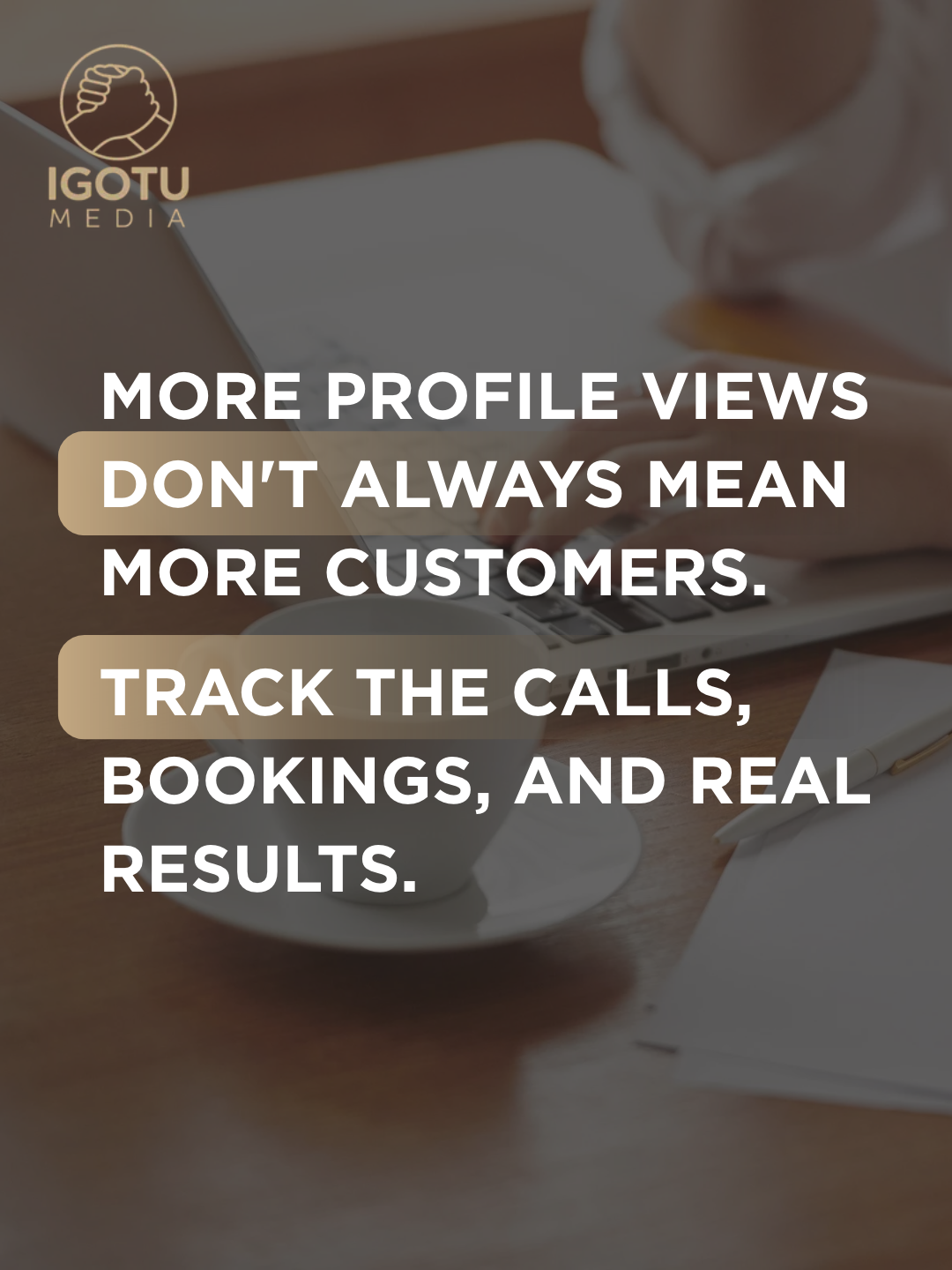
Judging Holiday Results by Views Alone
Profile visibility is useful, but it does not tell you whether people became customers. Google's performance documentation defines available metrics and notes that not every business has every metric. For example, the calls metric counts clicks on the call button rather than completed phone conversations. Website clicks and direction requests also describe interactions, not confirmed sales or visits.
Connect profile activity with business outcomes
Compare a consistent reporting period with your own inquiry, booking, or sales records. Record major changes such as special hours, reduced capacity, promotions, website edits, or advertising so the numbers have context. Some reported activity can include Google Ads, so avoid attributing every change to unpaid optimization.
A rise or fall is a starting point for investigation, not proof that one edit caused the result.
| What you observe | What it does not establish | A useful follow-up |
|---|---|---|
| More profile views | More qualified customers | Review the relevance and outcome of inquiries |
| More call-button clicks | More answered calls or bookings | Check answering coverage and completed conversations |
| More website clicks | A functioning conversion process | Test the destination and compare form or booking records |
| More direction requests | Confirmed visits or purchases | Compare with available in-store information |
| Fewer bookings during a busy week | A profile failure by itself | Review availability, response time, demand, and tracking |
For a Phoenix shop, visits and transactions may matter most; for a Mesa contractor, qualified service requests may be more useful. A national business with local branches should avoid blending unrelated locations into one conclusion. Review the available data for each operation and explain limitations honestly. That approach turns Google Maps optimization for small businesses into a practical customer-acquisition discussion rather than a contest to produce the largest view count.
Prioritize Your Holiday Local SEO Checklist
Start with mistakes that can immediately mislead or block a customer. Incorrect hours, an unusable phone number, and a broken booking destination deserve attention before another decorative post. After those essentials work, improve the information that helps someone choose and contact you. Then establish who will maintain the details as holiday schedules and availability change.
Decide what deserves attention first
- Correct now: Wrong hours, contact information, closed locations, broken links, and expired offers.
- Clarify before promotion: Service availability, genuine offer conditions, booking steps, and appointment deadlines.
- Improve next: Current photos, useful service descriptions, and answers to repeated customer questions.
- Maintain throughout the season: Review responses, changing availability, public profile accuracy, and inquiry follow-up.
- Measure consistently: Relevant profile interactions alongside actual business outcomes and operating capacity.
Set responsibilities before the busiest shopping weeks rather than assuming you will remember every task. A short shared checklist can identify who approves hours, supplies photos, responds to feedback, and updates the website. Use the same approach across Scottsdale, Chandler, Gilbert, and other markets while keeping each location's details accurate. Consistency means a dependable process, not identical information for different businesses.
What should you budget for help?
Managing a Google Business Profile directly does not require paying Google for the profile itself. Professional support pays for the review, implementation, coordination, and ongoing work you choose to delegate. For broad market context,
Clutch's SEO pricing guide lists
$100 to $149 per hour for local SEO services among its provider data. That benchmark covers a broader service category than a single holiday-hours correction and should not be treated as a ready-made holiday package.
| Budget item | Cost context | What to clarify |
|---|---|---|
| Updating your own profile | No Google profile-management fee | Staff time, access, and responsibility |
| Independent local SEO benchmark | About $100 to $149 per hour | Broad provider data rather than a quote for your project |
| Focused holiday preparation | Depends on the agreed scope | Profiles, corrections, content, and destination testing |
| Ongoing support | Depends on responsibilities and frequency | Updates, reporting, approvals, and customer-response coverage |
| Website improvements | Depends on required changes | Copy, forms, booking systems, and technical work |
We start by understanding what already works and what needs attention. If the issue is a few inaccurate fields, the next step should reflect that limited need. If the profile leads to a confusing website or unanswered inquiries, a broader plan may be useful. Ask for clear deliverables, ownership, approval responsibilities, and reporting before deciding which support is worth paying for.
Frequently Asked Questions
Should I confirm holiday hours if nothing changes?
Yes, Google recommends confirming hours for official holidays even when they match your usual schedule. It helps customers distinguish confirmed availability from an assumption. Check the relevant dates before the holiday rather than relying only on a post.
Will adding holiday posts guarantee better rankings?
No. Posts can communicate useful information, but no individual holiday update guarantees placement. Google explains local ranking through multiple factors, including relevance, distance, and prominence.
Do service businesses need holiday updates without a sale?
They can benefit from accurate scheduling and service information. Office closures, appointment availability, and how to request help may be more useful than a discount. Only communicate arrangements your team can actually deliver.
Should I ask customers to mention holiday keywords in reviews?
Do not pressure customers to include specific wording. Ask for honest feedback based on their experience and follow Google's review policies. Avoid incentives and practices that selectively seek positive reviews.
Is posting new photos every day necessary?
No fixed daily quota is needed for this checklist. Prioritize images that accurately show your business and answer useful questions. Replace misleading or outdated information rather than uploading repetitive material solely to appear active.
What if I have time to fix only a few things?
Confirm hours, test contact methods, and open the website or booking destination on a phone. Those checks address common interruptions in the customer journey. Then assign responsibility for keeping information current through the season.
Make Your Holiday Visibility Easier for Customers to Use
You do not need a larger holiday campaign before checking whether customers can find accurate information and reach your team. Our SEO and online visibility services help connect your profile, website, and customer journey around the business you have built. We work with small businesses across Arizona and the United States, including Mesa, Phoenix, Scottsdale, Chandler, and Gilbert. The goal is practical progress you understand and assets your business continues to own.
Tell us about your business if you would like help deciding what to improve before the holiday season. We can review the gaps and explain the options without assuming you need every service. Start with the changes that matter most to your customers and current capacity. Together, we can build a manageable plan for accurate information, useful content, and a clearer path to contacting you.
SEO and Online Visibility Services
Related Blog: 8 Content Ideas to Build Q4 Demand
Related Blog: How E-E-A-T Helps Small Businesses Build Trust

Simple steps. Big results.
Contact Us Form
We will get back to you as soon as possible.
Please try again later.
More Post Like This:


Level Up Your Online Strategy
Whether you're running a service business along the Beeline Highway, trying to get found during tourist season, or just tired of watching competitors outrank you in Show Low or Heber, this is where that changes. Book a free consultation with iGotU Media. No pressure, no jargon, no 90-minute sales pitch. Just an honest conversation about where your business stands and what it would take to get found.