


The Role of Analytics in Marketing Campaigns: What Business Owners Should Actually Measure

Marketing feels productive when posts are going up, ads are running, and traffic is coming in — but without analytics, it’s impossible to know if your efforts are actually working.
Many small business owners either:
- Don’t track performance at all, or
- Track
everything without knowing what matters
Analytics don’t have to be complicated. When used correctly, they give clarity, confidence, and control over your marketing decisions. At iGotU Media, we believe analytics should inform strategy — not overwhelm business owners.
Why Marketing Analytics Matter (Even for Small Businesses)
Analytics answer one core question:
Is my marketing helping my business grow?
Without analytics, businesses:
- Continue spending on strategies that don’t convert
- Rely on gut feelings instead of data
- Mistake activity for progress
With analytics, you gain:
- Visibility into what’s working
- Confidence in where to invest
- The ability to pivot before money is wasted
You don’t need a massive dashboard — you need the
right data.
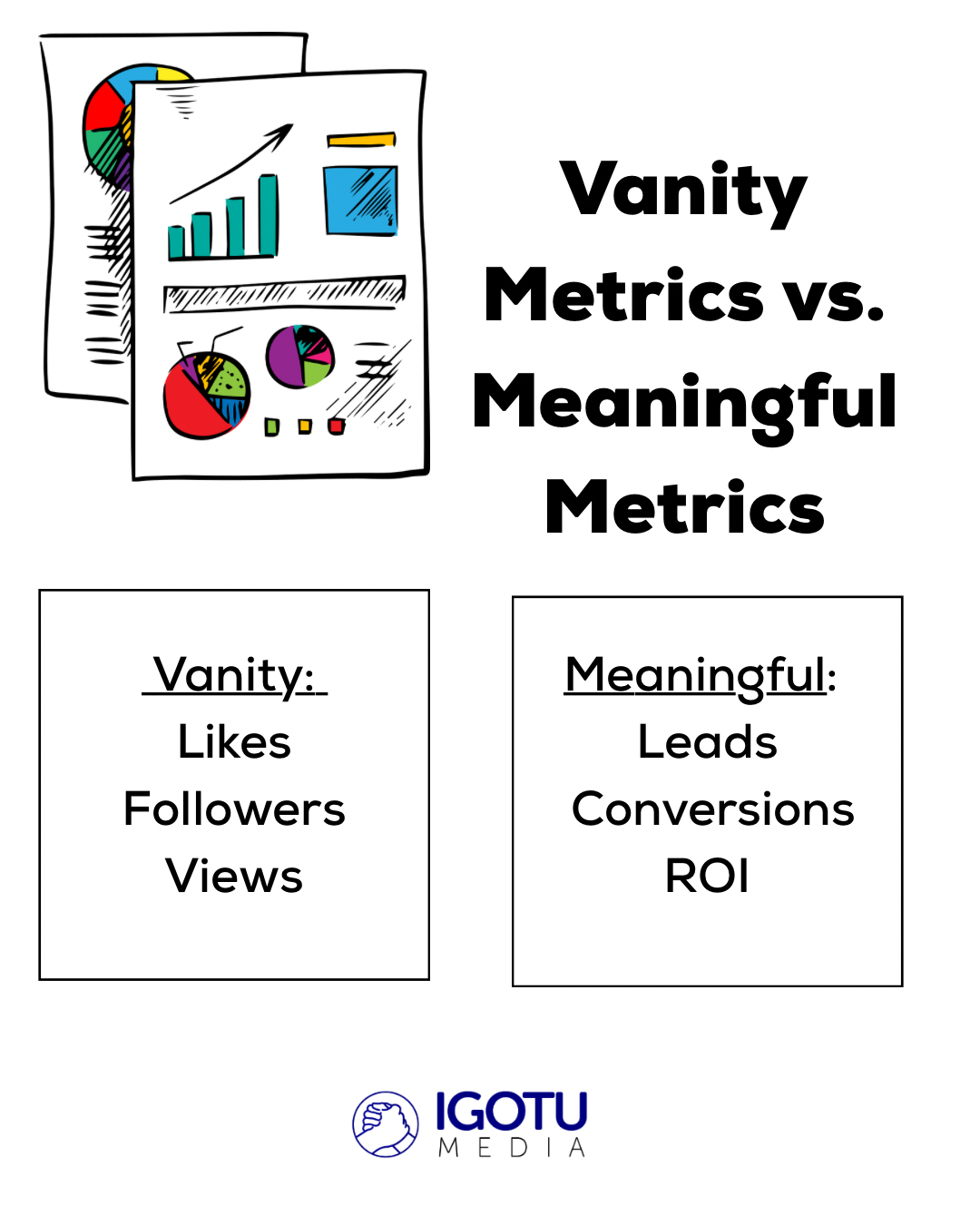
Vanity Metrics vs. Meaningful Metrics
One of the biggest misconceptions in marketing is that more numbers automatically mean better results.
Vanity metrics look impressive but don’t drive decisions:
- Likes
- Follower counts
- Impressions
- Views
These numbers show exposure — not impact.
Meaningful metrics connect directly to business outcomes:
- Website traffic from specific campaigns
- Calls, form submissions, or bookings
- Email open and click-through rates
- Cost per lead
- Conversion rates
If a metric doesn’t help you make a decision, it’s probably not the one you should focus on.
What Business Owners Should Measure First
If you’re just getting started, keep it simple.
Focus on:
- Traffic Source – Where are people coming from?
- Engagement – Are they clicking, reading, or staying?
- Conversions – Are they calling, booking, or submitting forms?
- Consistency – Are results improving over time?
These four data points give a clear picture of campaign performance without complexity.
What ROI Really Looks Like in Marketing
Return on investment doesn’t always mean immediate sales.
Marketing ROI can include:
- Increased inbound calls
- Shorter sales cycles
- Higher-quality leads
- Improved brand trust
- Stronger long-term visibility
Some campaigns are designed for awareness, others for conversion. Analytics help you understand
which role each campaign plays.
Why Many Businesses Avoid Analytics (And Why That’s a Mistake)
Analytics are often avoided because they:
- Feel intimidating
- Seem technical
- Are presented without context
But avoiding analytics doesn’t eliminate uncertainty — it creates it.
When analytics are simplified and aligned with goals, they become one of the most empowering tools a business owner can use.
Turning Data Into Decisions
The real power of analytics is not the numbers — it’s the insight.
Good analytics answer questions like:
- Should we continue this campaign?
- Should we shift budget?
- Which content should we create more of?
- What’s actually driving leads?
When data informs action, marketing becomes intentional instead of reactive.
Final Thoughts
You don’t need to measure everything. You need to measure the right things.
Marketing analytics should bring clarity, not confusion. When businesses understand what to track — and why — they gain control over their growth.

Simple steps. Big results.
Contact Us Form
We will get back to you as soon as possible.
Please try again later.