How to Prepare Your Small Business for Seasonal Search Traffic Spikes
Most small businesses experience their seasonal search traffic the same way — they get busy, notice more calls coming in, and assume the season is just doing what it does. What they don't realize is that the businesses ranking above them in search results during that peak season didn't get there during the season. They got there months before it. Search demand follows predictable calendar patterns that repeat every year. The roofing company that ranks for "spring roof inspection Rockwall TX" in April published that blog in January. The plumber that dominates "frozen pipe repair Clark County" in December built that content in September. Seasonal SEO is a planning problem, not a publishing problem. iGotU Media builds content systems that are ahead of demand — not catching up to it. This guide explains how to identify your seasonal windows, what to publish and when, and how to prepare every part of your local SEO system before your peak season arrives.
Why Seasonal Search Traffic Is Predictable — And Most Small Businesses Miss the Window
Google Search is a demand-mapping tool. The searches people make follow the seasons, the weather, the calendar, and the life events that drive purchasing decisions in every local service industry. This predictability is an enormous opportunity — and most small businesses miss it entirely because they're responding to demand rather than anticipating it.
How the ranking timeline actually works: When you publish a blog post or service page, Google doesn't immediately rank it at its full potential. The process takes time:
- Google discovers and indexes the new content — days to weeks
- Google begins evaluating the page's relevance and authority signals — weeks to months
- The page reaches its ranking potential based on content quality, internal linking, and domain authority — typically 3 to 6 months for competitive terms
This means content published in June for a summer search spike is competing for rankings while the spike is already happening. Content published in March for the same spike has 3 months of indexing, authority building, and ranking improvement behind it before the first summer searcher types the query.
The businesses that dominate seasonal local searches aren't smarter — they're earlier. The roofing company that owns "hail damage roof inspection North Texas" in April started that content in January. The lawn care company that ranks for "lawn aeration Atlanta GA fall" in September published that blog in June. The timing isn't accidental. It's the strategy.
Why most small businesses miss the window: The busy season is the worst time to create content — the business is at capacity, the team is occupied, and content creation gets deprioritized. The businesses that solve this problem create content in their slowest periods for their upcoming peak periods. That's the calendar inversion that changes everything.
How to Identify Your Business's Seasonal Search Windows
Before you can publish ahead of demand, you need to know exactly when your demand peaks and what your customers are searching for during each phase:
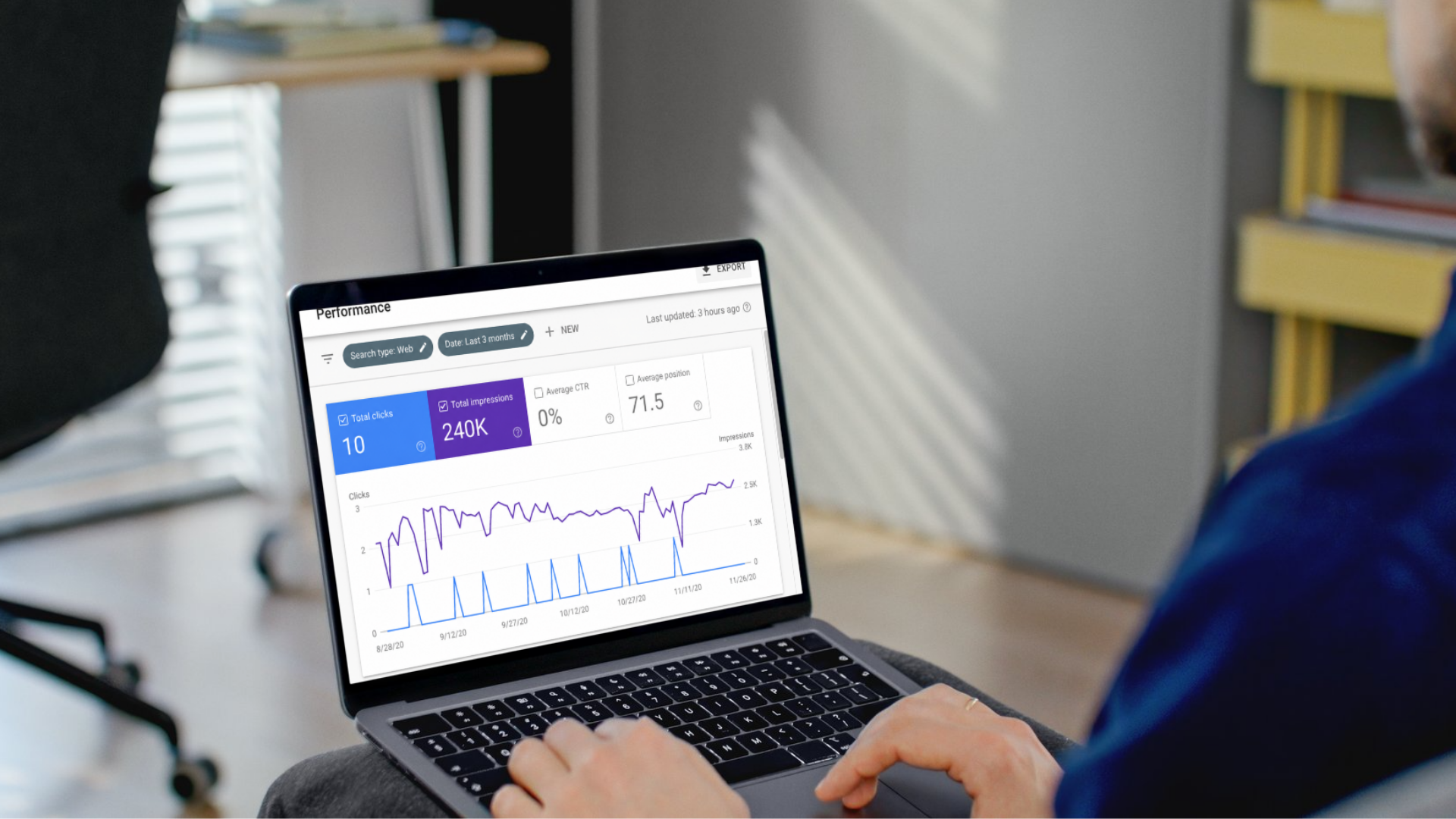
Google Search Console — your actual search data Search Console shows you what queries are already bringing people to your site and when. Look at the Performance report and filter by date range — compare month-by-month query volume across the past 12 months. The queries that spike in specific months are your seasonal windows. The queries that are flat year-round are your evergreen opportunities.
Google Trends — the broader market picture Google Trends shows search interest over time for any keyword. Type in your core service keywords and look at the 12-month pattern. You'll see exactly when searches for "roof inspection," "sump pump repair," or "tree trimming" peak in your specific region — and how many months before that peak you need to be publishing.
Your own booking and call data Your busiest months aren't guesswork — they're documented in your CRM, your invoices, and your calendar. Map your business volume by month and work backward 3 to 4 months. That's your content publishing window for each peak period.
Competitor analysis Search your primary service keywords during the off-season. The businesses ranking at the top published that content months ago. Check their blog publication dates — they'll tell you exactly when the winning competitors in your market start publishing for each seasonal window.
The questions to answer before building your seasonal content calendar:
- Which months generate the most calls and revenue in my business?
- What specific keywords do customers search in the 30 to 60 days before they call me?
- When do those searches start increasing — not peak, but start?
- What's the 3-month window before that increase when I should be publishing?
The Content You Need Published Before Your Peak Season Begins
Different content types serve different purposes in the seasonal SEO funnel — and each has a different optimal publishing lead time:
90 to 120 days before peak season — pillar and service pages Your primary seasonal service pages need the most lead time because they're competing for the highest-volume keywords and need the most authority to rank. These are the foundational pages that capture broad seasonal intent.
Examples:
- "Spring Roof Inspection Services Royse City TX"
- "Summer Lawn Care Services Sanger TX"
- "Fall Plumbing Inspection Yacolt WA"
What they need: Comprehensive coverage of the service, local specificity, internal links from related cluster content, and enough lead time for Google to evaluate and rank them before the spike.
60 to 90 days before peak — informational and educational blogs These blogs capture the discovery-stage searcher — the homeowner who's thinking about a service but hasn't decided to call yet. They build trust and authority while capturing long-tail searches that service pages don't target.
Examples:
- "Signs You Need a Roof Inspection Before Summer in North Texas"
- "How to Tell If Your Trees Need Trimming Before Storm Season"
- "What Does a Whole Home Plumbing Inspection Actually Cover?"
30 to 45 days before peak — commercial investigation content This content targets the buyer who has identified a need and is evaluating options. It captures the decision-stage searcher at the moment highest-converting leads are generated.
Examples:
- "How to Choose a Roofer in Royse City TX"
- "What to Expect During Professional Lawn Aeration in Sanger TX"
- "Emergency Plumbing Services in Clark County WA — What to Look For"
The quick pre-season content checklist:
☐ Refresh last year's seasonal content with updated dates, pricing, and service details — don't create new URLs if old ones have authority
☐ Confirm all seasonal service pages load quickly — page speed issues cost conversions when traffic spikes
☐ Verify all CTAs on seasonal pages are active and linking correctly
☐ Confirm internal links from new seasonal blogs point to the relevant service pages
How to Update Your Google Business Profile for Seasonal Demand
Your GBP is the local SEO component most directly connected to local pack rankings that drive calls — and it needs pre-season preparation just as much as your website content:
Update service descriptions before the season Navigate to Edit Profile → Services and update your seasonal service descriptions to include the specific keywords customers search during that period. "Spring roof inspection" in April. "Summer lawn care" in June. "Winterization plumbing" in October. Google uses your service descriptions as relevance signals for local pack ranking.
Publish GBP posts on a consistent weekly schedule GBP posts expire after 7 days — a post published once and forgotten contributes nothing to your active profile signals within a week. A consistent weekly posting schedule maintains the active management signal that Google weights in local pack ranking. During peak season that rhythm should be 2 posts per week minimum.
Update your hours for seasonal changes If your peak season involves different hours — earlier availability, extended weekend hours, emergency service availability — update them before the season begins. Incorrect hours create customer frustration, negative reviews, and a mismatch between your GBP and actual operations.
Rotate your cover photo seasonally Your GBP cover photo is the first visual impression on every local pack result. A photo showing winter work during summer, or spring landscaping during fall, signals a profile that isn't being maintained. Seasonal photo rotation takes 10 minutes and signals active management.
Pre-populate your Q&A section The GBP Questions and Answers section lets you add your own questions and answers — placing FAQ content directly on your listing. Add the top questions customers ask before booking your peak season service and answer them with specific, keyword-rich responses.
Why Review Velocity Matters More During Peak Season
This is the review strategy insight most small businesses don't connect to seasonal SEO — and it changes how you think about the timing of your review generation efforts:
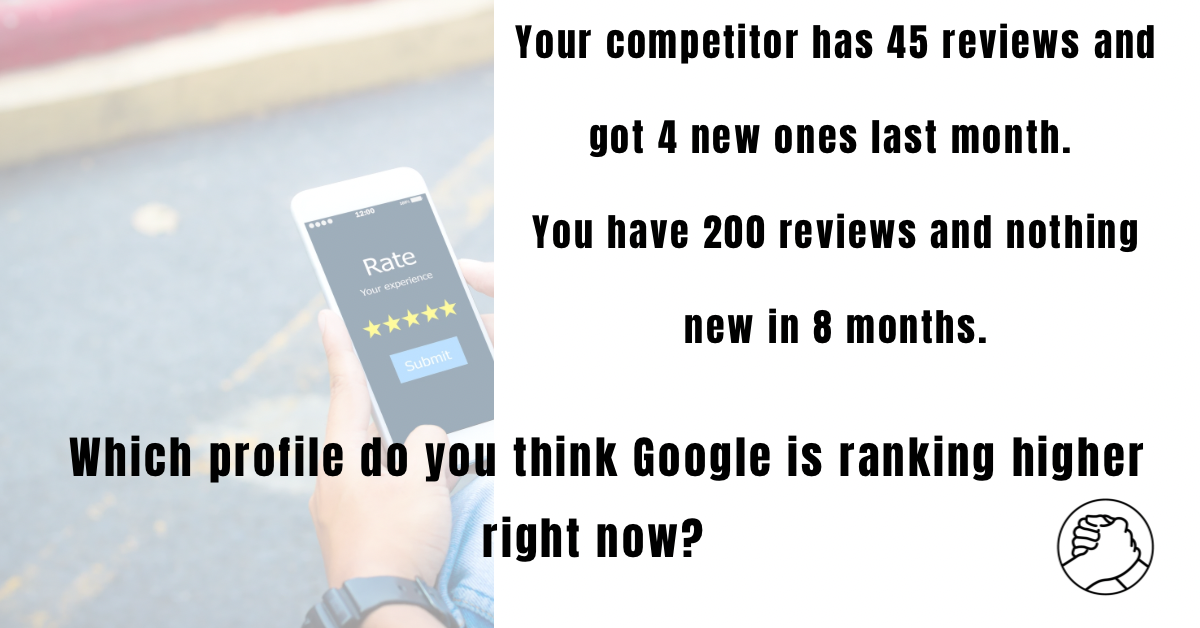
The recency and velocity effect on local pack ranking Google's local algorithm treats recent reviews as a signal of current business activity and relevance. A business that generates consistent new reviews in the months leading into peak season has a local pack authority profile that's stronger than a competitor with more total reviews but lower recent activity.
The reactive review surge problem Some businesses wait until peak season to ask for reviews — which produces a burst of activity that can trigger Google's spam detection. A sudden spike of 30 reviews in two weeks looks algorithmically suspicious. Consistent, steady review generation over the 3 months before peak season builds a natural pattern that Google trusts and weights appropriately.
The pre-season review strategy:
- Begin a systematic review request program 3 months before your peak season
- Target 3 to 5 new reviews per month in the build-up period
- Respond to every review within 24 to 48 hours — response rate is a ranking signal
- The result is a review profile that's active, recent, and algorithmically trusted precisely when your seasonal traffic spike arrives
The Off-Season Content Strategy That Wins Peak Season Rankings
This is the counterintuitive truth about seasonal SEO that separates businesses that dominate seasonal search from those that chase it:
Your summer SEO gets built in January. Your fall SEO gets built in June. Your spring SEO gets built in December.
The 3 to 6 month indexing and authority-building timeline means content created during your peak season ranks for next year's peak season — not this one. The businesses that consistently outrank competitors during seasonal spikes aren't publishing more during the season. They're publishing earlier in the off-season.
What off-season content production looks like in practice:
- January through February: publish summer service content, summer comparison blogs, summer FAQ guides
- March through May: publish fall prep content, pre-winter service guides
- June through August: publish winter emergency content, holiday-period service pages
- September through November: publish spring service content, spring preparation guides
The compound effect over 24 months: A business that commits to this publishing rhythm for two full years has seasonal content for every period that's had 12+ months to build authority. The first year is investment. The second year is returns. The third year is dominance.
Seasonal SEO Calendar — What to Do Each Quarter
Here's the practical quarter-by-quarter framework for local service businesses:
Q1 (January through March) — Build for spring, plant seeds for summer
| Month | Content Focus | GBP Action |
|---|---|---|
| January | Spring service pillar pages, winter emergency guides | Refresh service descriptions, update photos, request Q4 reviews |
| February | Spring FAQ and informational blogs, spring comparison content | GBP offer posts for early spring booking, upload fresh project photos |
| March | Hyper-local spring content — for example, "Cost of a plumbing inspection in Payson AZ" or "Signs you need a roof inspection before spring storms in Royse City TX" | Launch spring service update posts, confirm hours for spring season |
Q2 (April through June) — Execute peak season, plant for fall
| Month | Content Focus | GBP Action |
|---|---|---|
| April | Peak season service content, emergency and urgency blogs | Weekly GBP posts with active project photos, respond to all reviews within 24 hours |
| May | Decision-stage content for peak season buyers | Active review generation push, GBP offer posts for peak season services |
| June | Early fall prep content, summer maintenance guides | Update hours for summer schedule, begin fall service description updates |
Q3 (July through September) — Sustain summer, build for winter
| Month | Content Focus | GBP Action |
|---|---|---|
| July | Summer problem-solver content, early winter prep guides | Team and project photos from peak season work, confirm service area accuracy |
| August | Fall transition content, winter prep checklists | Audit NAP consistency across all directories, prepare fall offer posts |
| September | Winter service content, winterization guides | Fall offer posts live, update seasonal service descriptions for fall |
Q4 (October through December) — Close the year, build for spring
| Month | Content Focus | GBP Action |
|---|---|---|
| October | Winter emergency guides, end-of-season checklists | Update holiday hours, weekly GBP posts with fall and winter content |
| November | Holiday service content, year-end maintenance guides | Update Thanksgiving and holiday hours, final review push for the year |
| December | Evergreen resource guides, spring anticipation content | Update New Year's hours, pull full-year GBP analytics for planning |
How iGotU Media Builds Seasonal SEO Strategy for Every Client
Seasonal SEO done correctly isn't a calendar you fill in once — it's a system that runs continuously, always publishing 3 to 4 months ahead of demand, always updating GBP before the season changes, always building review velocity before the spike arrives.
Most small businesses don't have the capacity to maintain that system alongside running their actual business. That's exactly what iGotU Media manages — from Payson, AZ, for local service businesses across the country.
Here's how seasonal strategy is built into every iGotU client engagement:
Forward-looking topic planning Every blog topic we recommend is mapped to the seasonal search window it's designed to capture — not the week it's convenient to write. A roofing client's summer heat content is planned in March. A lawn care client's fall overseeding content is planned in June. The publishing calendar is always ahead of the demand curve.
GBP update coordination Weekly GBP posts are coordinated with the seasonal content we're publishing — reinforcing the same keywords and services across both the website and the GBP listing simultaneously. Service descriptions are updated before each seasonal transition. Photos are rotated. Hours are confirmed.
Review velocity integration Review request timing is coordinated with seasonal content publishing — building the review profile in the 60 to 90 days before each peak period so that local pack authority is strongest precisely when seasonal search demand peaks.
The compounding system Every blog we publish strengthens the cluster. Every cluster strengthens the pillar. The pillar ranks for broader seasonal terms. The spokes rank for specific seasonal long-tail searches. After 12 months the system has seasonal content for every period. After 24 months it has compounding authority across all of them.
For more on the cluster architecture behind this approach, read our
topic cluster strategy guide →. For how the GBP component integrates with content, read our
Google Business Profile optimization guide →.
Ready to build a seasonal SEO system that's always ahead of demand? Contact iGotU Media to discuss what that looks like for your specific business and market.
Read: How to Build a Blog Strategy That Brings Leads →

Simple steps. Big results.
Contact Us Form
We will get back to you as soon as possible.
Please try again later.
More Post Like This:


Level Up Your Online Strategy
Whether you're running a service business along the Beeline Highway, trying to get found during tourist season, or just tired of watching competitors outrank you in Show Low or Heber, this is where that changes. Book a free consultation with iGotU Media. No pressure, no jargon, no 90-minute sales pitch. Just an honest conversation about where your business stands and what it would take to get found.